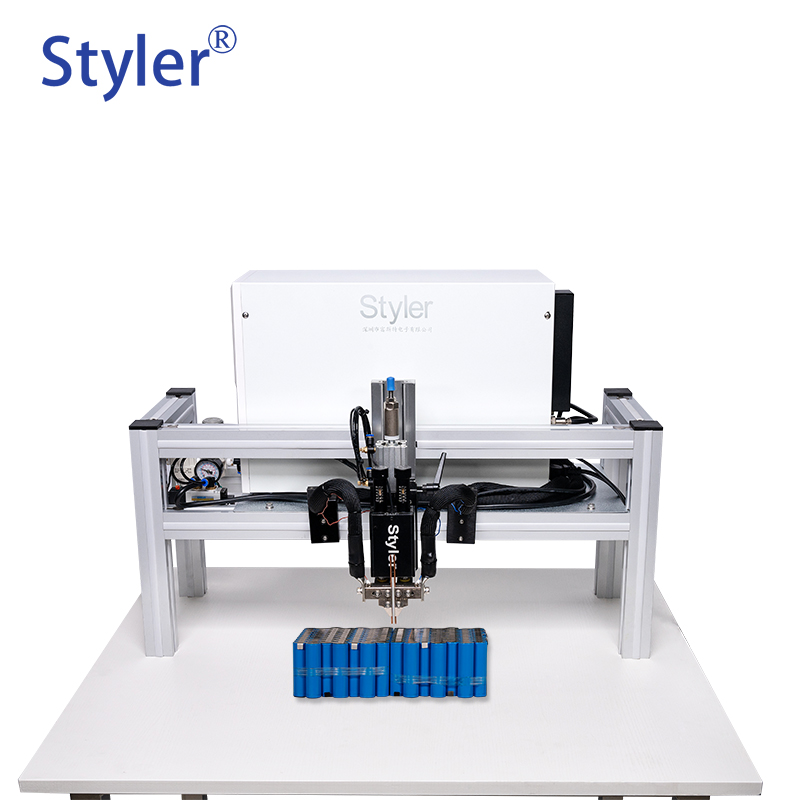
Featured Battery Pack Fabrication Systems
Industrial-grade automated lines and high-performance spot welders designed for micro-mobility battery pack assembly.
The Micro-Mobility Boom & The Critical Role of Battery Pack Fabrication
The global transition toward green transportation has fueled an unprecedented surge in the micro-mobility sector. Electric bicycles (e-bikes) and electric scooters (e-scooters) have transitioned from novelty urban transport to essential components of modern municipal infrastructure. Central to the performance, safety, and lifespan of these light electric vehicles (LEVs) is the lithium-ion battery pack. Constructing these packs requires connecting dozens, sometimes hundreds, of individual cylindrical cells (typically 18650 or 21700 form factors) into specific series and parallel configurations (e.g., 36V, 48V, or 52V systems).
In this high-stakes production environment, the selection of the joining technology is paramount. Spot welding machines have emerged as the industry standard for battery pack fabrication. Unlike traditional soldering, which introduces excessive heat that can damage sensitive internal battery chemistry and safety vents, spot welding relies on resistance welding. This method applies localized heat over milliseconds, creating strong, low-resistance metallurgical bonds between nickel or copper-nickel busbars and the battery terminals without compromising cell integrity.
Electric bicycles and e-scooters are subjected to constant mechanical vibrations, impacts, thermal cycling, and high current demands. A single poorly welded joint can lead to increased resistance, localized overheating, voltage drops, or complete pack failure. Under extreme conditions, a failing connection can trigger thermal runaway, making high-precision, automated spot welding machines a safety-critical requirement for manufacturers worldwide.
Market Status: Industrial Scale and Quality Control Demands
As regulatory bodies enforce stricter safety standards (such as UL 2271 for batteries used in light electric vehicles), the micro-mobility fabrication industry is shifting away from manual assembly. Manufacturers are adopting semi-automated and fully automated spot welding systems equipped with integrated quality monitoring. These machines ensure that parameters such as welding force, current, voltage, and displacement are monitored in real-time. The commercial landscape now demands high-throughput production lines capable of delivering zero-defect output to mitigate liability and ensure long-term field reliability.
Technical Deep Dive: How Spot Welding Technology Works in Battery Assembly
Resistance spot welding (RSW) operates on the principle of Joule heating, where heat is generated by the resistance of the materials to the flow of an electrical current. The mathematical relationship is expressed as:
Q = I² * R * t
Where Q represents the generated heat, I is the welding current, R is the total contact resistance (including the interface between the electrode and the nickel strip, the nickel strip itself, and the interface between the nickel strip and the battery terminal), and t is the duration of the current application.
The Anatomy of a Perfect Weld Nugget
Creating a reliable weld on a lithium-ion cell requires balancing several variables. The battery's positive terminal is typically a thin steel cap plated with nickel, while the negative terminal is the steel casing of the cell itself. The busbar material is usually pure nickel due to its excellent corrosion resistance, moderate electrical conductivity, and ease of welding. In high-power applications, copper-nickel composite strips are used to reduce overall resistance.
- Electrode Pressure: The welding head must apply a precise pneumatic or servo-driven force. Too little pressure leads to surface expulsion (sparking) and electrode degradation. Too much pressure reduces contact resistance so much that insufficient heat is generated to melt the metals, resulting in a weak joint.
- Dual-Pulse Technology: Modern spot welders utilize dual-pulse current profiles. The first pulse (a lower-current prepulse) cleans surface contaminants, flattens the nickel strip, and establishes uniform contact. The second pulse (the main welding pulse) delivers the energy required to melt the interfaces and form a robust weld nugget.
- Cooling & Solidification: After the current pulse terminates, the electrode pressure is maintained for a brief hold time, allowing the molten nugget to solidify under pressure, preventing micro-voids and cracking.
Comparing Welding Technologies for E-Bike Packs
While laser welding is gaining traction for high-volume automotive EV packs (using thick copper busbars), resistance spot welding remains the dominant choice for e-bikes and e-scooters. The capital investment for laser systems is high, and they require extremely tight mechanical tolerances. Resistance spot welding offers a robust, forgiving, and highly cost-effective alternative that seamlessly accommodates the varying heights and alignments of cylindrical cells in plastic brackets.
Welding Tech Comparison
| Feature | Resistance Spot | Laser Welding |
|---|---|---|
| Equipment Cost | Moderate to Low | Very High |
| Tolerance Sensitivity | Low (Forgiving) | High (Requires precision) |
| Heat Affected Zone | Localized (Short pulse) | Extremely Minimal |
| Maintenance | Electrode dressing | Optics alignment |
Deep Application Scenarios: Customizing Welding Parameters for E-Bikes vs. E-Scooters
While both electric bicycles and e-scooters rely on cylindrical lithium cells, their structural layouts and operational environments differ significantly, demanding tailored spot-welding strategies.
1. Electric Bicycles (E-Bikes): Down-Tube and Rack-Mounted Packs
E-bike batteries are typically integrated into the down-tube of the bicycle frame or mounted on the rear cargo rack. Down-tube packs are long, narrow, and must fit within tight physical envelopes. This configuration requires complex, multi-layered nickel strip designs. The spot welding machine must be highly versatile, often utilizing multi-axis CNC gantries or duo-headed welding units to reach recessed battery terminals. Because these packs are close to the rider and exposed to direct sunlight, thermal management is critical. Spot welding parameters must be optimized to ensure minimal heat transfer to the cell's internal separator during assembly.
2. E-Scooters: Under-Deck Battery Enclosures
E-scooter battery packs are usually located beneath the riding deck. This location exposes the battery to severe mechanical impacts from curbs, road debris, and continuous high-frequency vibrations. To prevent structural fatigue of the connections, fabricators often use thicker nickel-plated steel or pure nickel strips (0.15mm to 0.25mm thickness). Welding these thicker materials requires higher current amplitudes (such as those provided by high-capacity DC inverter power sources) and precise pressure profiling to prevent burning through the battery casing while ensuring a deep, high-strength weld nugget.
Standard AC welding transformers are increasingly being replaced by Medium Frequency Direct Current (MFDC) and Transistor-Controlled welding power supplies. These advanced systems provide millisecond-level feedback loops, adjusting the current in real-time to compensate for variations in nickel plating quality, electrode wear, and surface contamination. This level of control is essential for meeting the strict quality standards of modern micro-mobility brands.
About Us
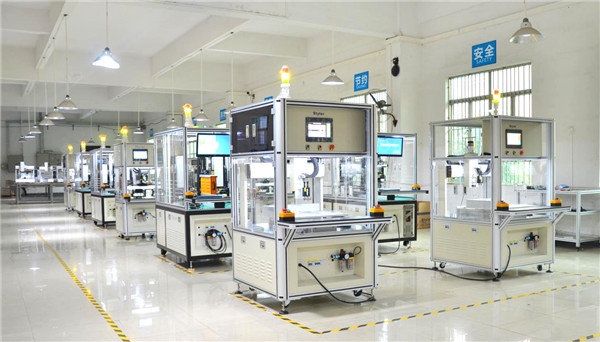
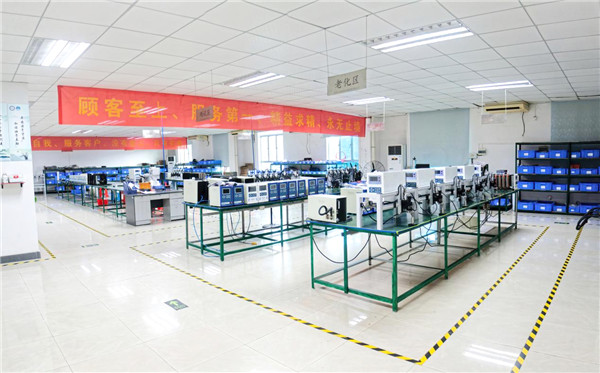
Styler is a professional manufacturer aims to provide high quality and trustful welding machine to the customer. Our company has unique understanding and innovative idea in the field of resistance welding and laser applications, and the welding technology has reached to the international level through continuously investing in the technical research and development. We also cooperate with education institutes on the technology development to enhance our machine’s performance and application area.
Customer Centric is our core value. Besides of providing personalized high performance and durable machines to the customer, we value the hospitality the most, as we wish customers to have a pleasant purchase experience with us for each visit. Therefore, we have been providing ongoing training internally to provide excellent customer service to our customer. We believe the customer-oriented direction is the key to success, and it has been successfully helping us to develop a strong reputation in the industry, allowing us to retain customers and attracting new customers to start the business with us.


Company Vision
To provide a cutting-edge welding machine in a reasonable price to the customer has been the long-term goal for Styler, and thus, we will continually be developing innovative, stable, and budgeting machine to the customer around the world.
Corporate Social Responsibility
Giving back to the society is important as we are not able to go this far without the community’s support. Therefore, Styler has been actively participating in the charity works and government events each year, to improve the local municipal service and facility.
Employee Development
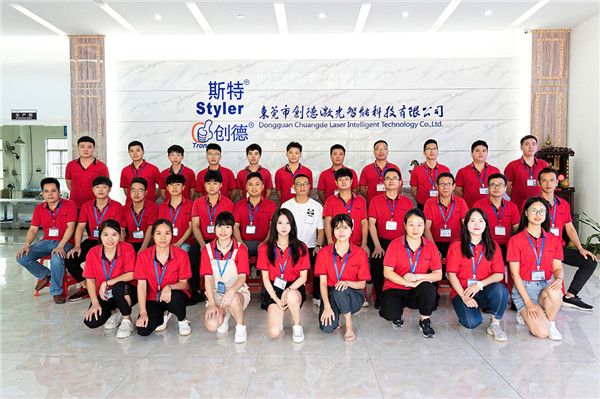
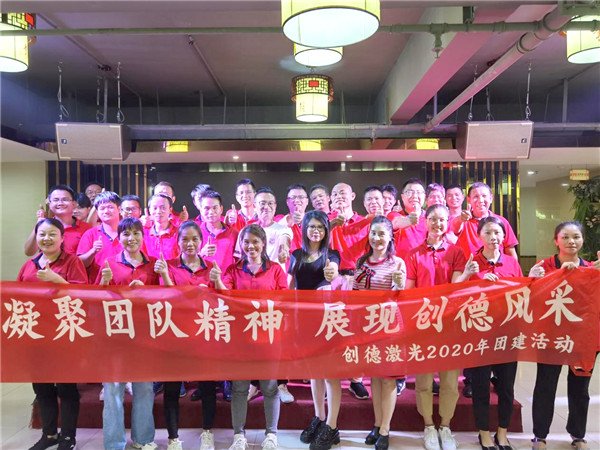
Despite all the growth that has occurred over the years, we remain extremely employee centric. Our management team works tirelessly to ensure each Styler Welding employee feels fulfilled from work and life. As work-life balanced living style is proved that it would increase employee’s performance at work, and consequently, providing better service and product to the customer.
Our Comprehensive Product Portfolio
Explore our complete range of resistance spot welders, double-headed automatic systems, and customized assembly line solutions.
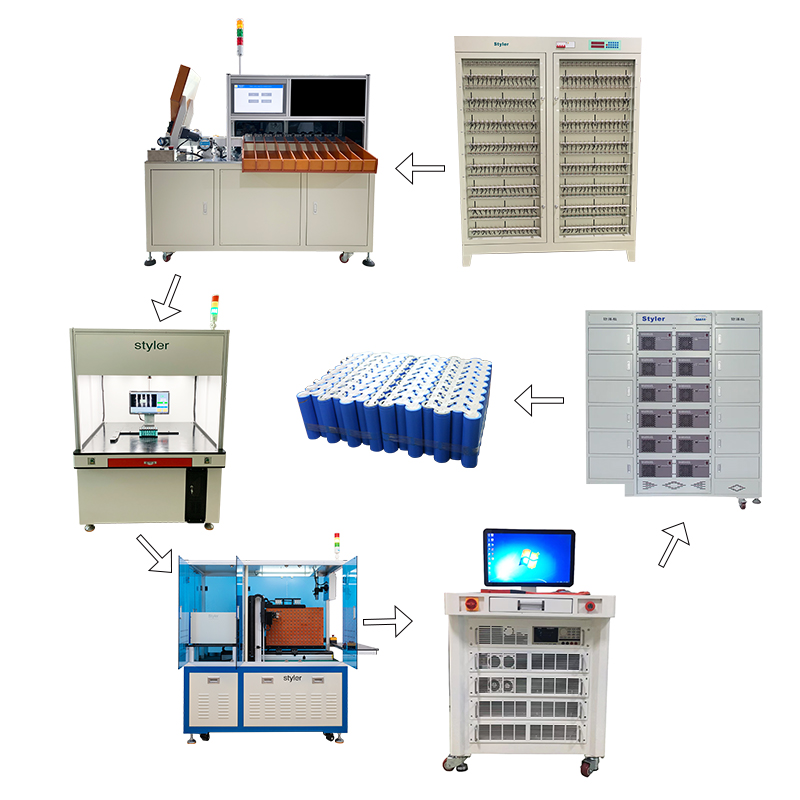
Automatic Lithium Battery Ev Battery Pack Assembly Line For Energy Storages
Learn More
Duo-Headed Automatic Welding Machine
Learn More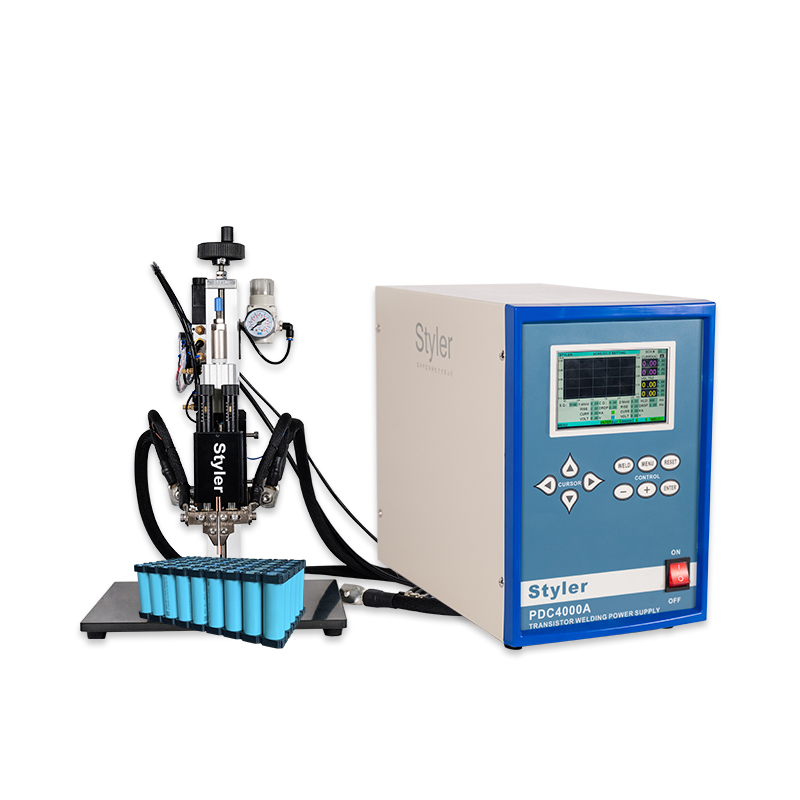
PDC2000A Welding Spot Machine
Learn More
Custom Prismatic Battery Pack Assembly Line Solutions
Learn More
IPV100 Resistance Spot Welding Machine
Learn More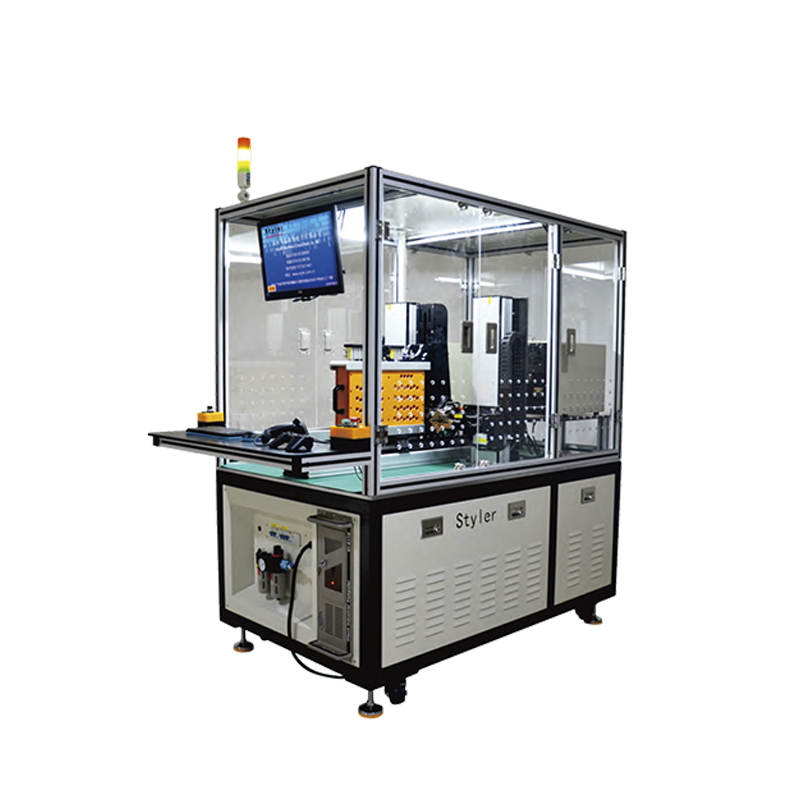
DUO-HEADED – IPC
Learn More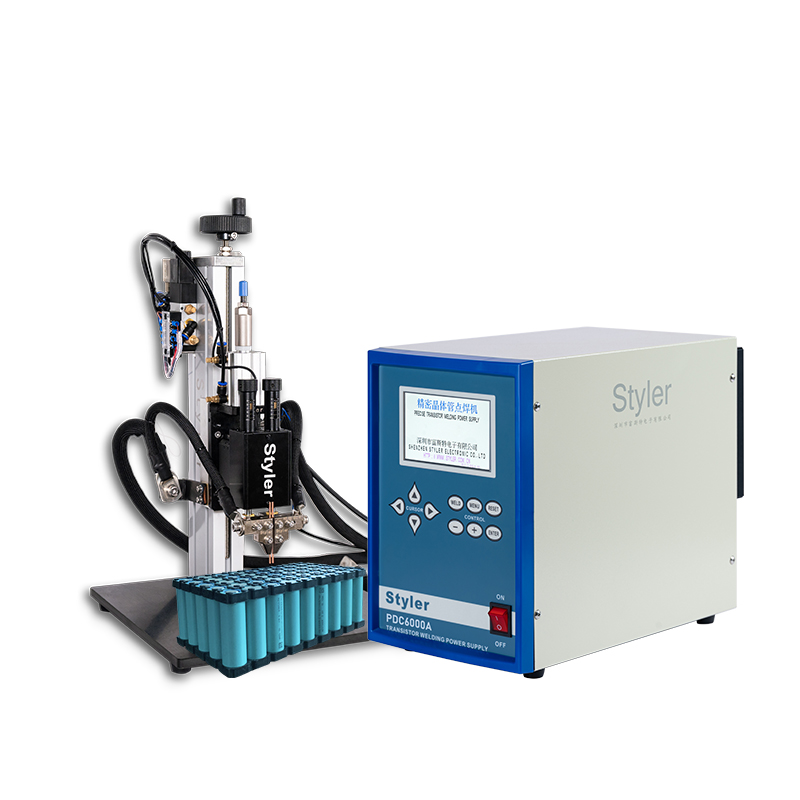
PDC6000A Spot Welding Machine
Learn More