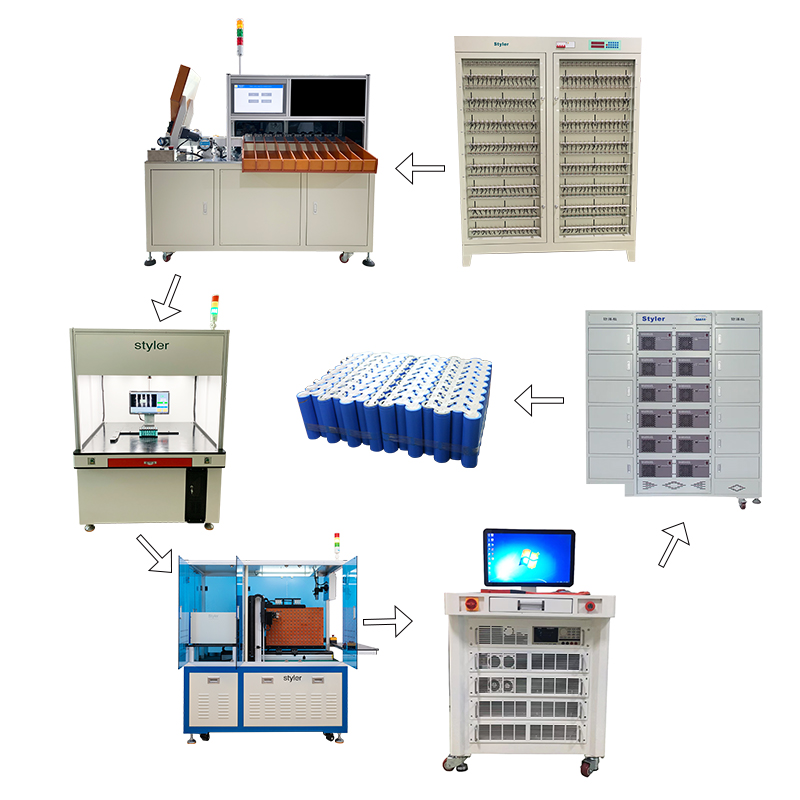
Key ESS Battery Laser Welding Workstations
High-throughput, automated laser welding systems designed for precise busbar interconnection, cell tab joining, and continuous quality inspection in ESS battery pack lines.
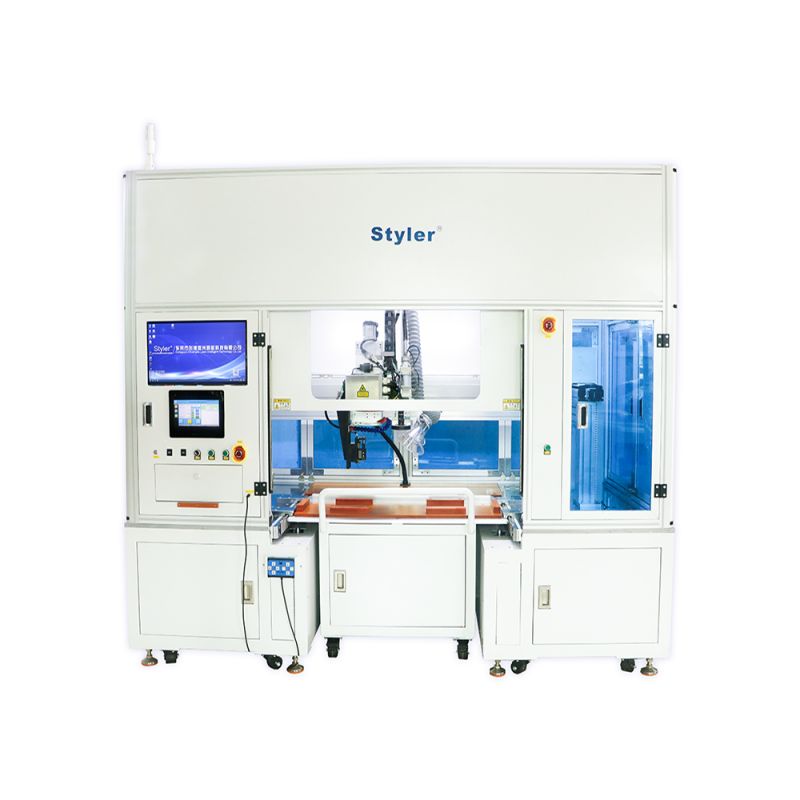
6000W Automatic Laser Welding Machine (ESS Heavy-Duty Busbar)
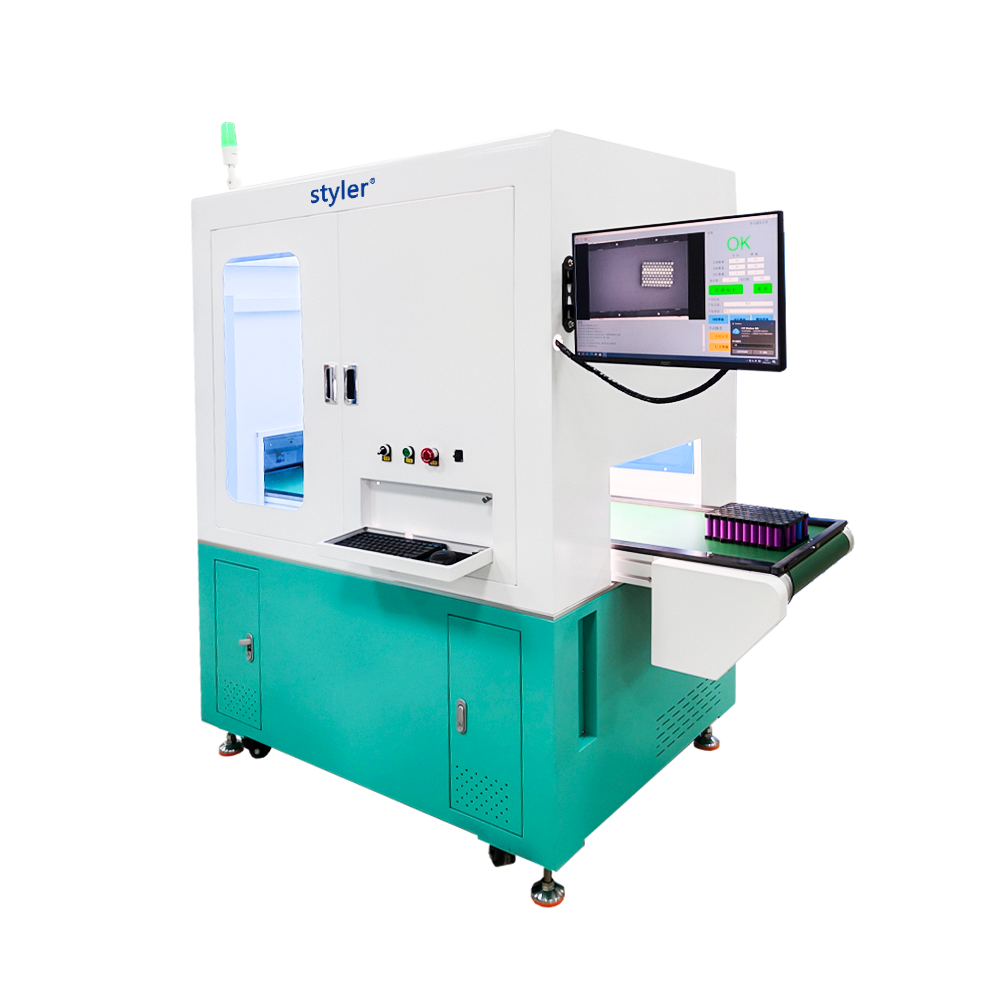
CCD Visual Inspection Machine (AI-Guided Weld Quality Monitoring)
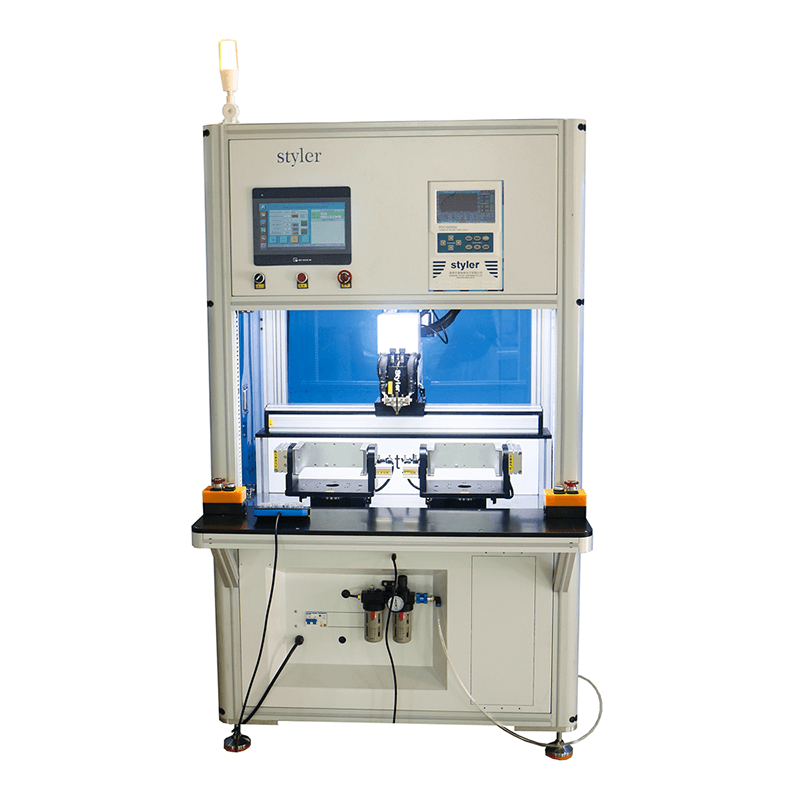
7 AXIS Automatic Welding Machine (Prismatic & Cylindrical ESS Modules)
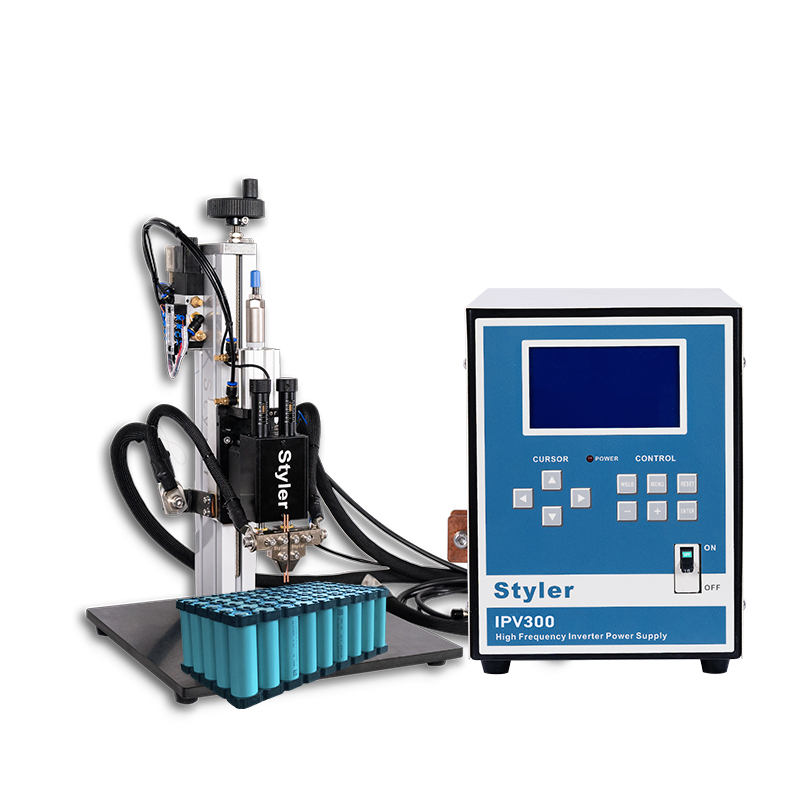
IPV300 Point Welding Machine (Precision Micro-Laser Spot Welder)
Industrial Landscape of Energy Storage System (ESS) Manufacturing
As global power grids shift toward renewable energy integration, battery energy storage systems demand robust thermal-electrical interconnects and reliable joining mechanisms.
The global surge in renewable energy generation—driven primarily by utility-scale solar photovoltaics and wind farms—has elevated Energy Storage Systems (ESS) from auxiliary assets to critical grid infrastructure. Modern ESS manufacturing encompasses large-scale containerized battery banks, commercial & industrial (C&I) microgrid storage, and residential wall-mounted units. Unlike electric vehicle (EV) battery packs prioritizing energy density and spatial constraints, ESS battery packs are built for extended operational lifespans (15–20 years), high cycle endurance (over 6,000–10,000 deep cycles), uncompromising safety, and low total cost of ownership (TCO).
Achieving these strict long-term reliability criteria hinges directly on the mechanical, electrical, and thermal integrity of millions of micro-joints connecting individual battery cells into modules and megawatt-hour containers. Battery laser welding has emerged as the definitive manufacturing standard over conventional mechanical clamping or resistive spot welding methods due to its contactless nature, zero tool wear, exceptionally tight heat-affected zones (HAZ), and minimal electrical resistance.
Thermal Impact Control in LFP & NMC Cells
High power density during laser welding delivers precise penetration without radiating damaging thermal heat to delicate battery separators or polymer electrolyte seals.
Dissimilar Metal Joining Capabilities
Advanced laser oscillation (wobble welding) effortlessly overcomes metallurgic incompatibilities when joining high-conductivity copper busbars to aluminum cell terminals.
High-Speed Industrial Throughput
Automated multi-axis laser motion platforms process complex grid patterns, reducing cycle times by up to 70% compared to traditional mechanical fastening.
Real-Time Melt Pool Quality Tracking
Coaxial vision sensors and infrared temperature monitoring actively verify penetration depth, preventing blow-throughs and structural pinholes.
Advanced Laser Welding Physics in ESS Cell-to-Pack Integration
Exploring beam-material interaction, keyhole dynamics, and metallurgical challenges across prismatic, cylindrical, and pouch form factors.
Prismatic Cell Top-Cap & Busbar Welding
Prismatic LiFePO4 cells dominate large-scale containerized ESS due to high volumetric efficiency. Laser welding creates hermetic seals on cell explosion-proof valves, top covers, and heavy copper-aluminum busbar stacks with penetration depths up to 2.5mm without spatter formation.
Cylindrical 21700 / 4680 Wire Bonding & Tabs
For high-power industrial backup ESS using cylindrical formats, dynamic laser welding ensures ultra-reliable tab-to-busbar connections. Fiber lasers with adjustable ring mode (ARM) eliminate weld micro-cracks on high-reflectivity aluminum or nickel-plated steel tabs.
Pouch Cell Multi-Layer Tab Stack Joining
Joining up to 60 layers of delicate copper and aluminum foil tabs requires precise pulse energy management. Laser welding prevents layer distortion, micro-porosity, and resistance hot-spots, ensuring uniform current distribution throughout the ESS module life.
Metallurgical Challenges: Solving Copper-to-Aluminum Joining
One of the primary engineering obstacles in battery energy storage manufacturing is joining dissimilar reflective metals—specifically pure Copper (Cu) and Aluminum (Al) alloys. Copper absorbs laser energy poorly at standard near-infrared wavelengths (1064 nm) room temperatures, leading to erratic coupling, thermal runaway, and brittle intermetallic compounds (IMCs) like CuAl2.
Styler's Engineering Breakthrough: By utilizing blue-infrared hybrid laser systems combined with high-frequency spiral laser wobbling, our automatic welding systems maintain steady energy absorption. Wobble technology continuously oscillates the laser beam, expanding the melt pool duration, permitting trapped gases to escape, and controlling intermetallic phase formation to achieve high shear strength (>1.5 kN) and electrical contact resistance below 5 micro-ohms.
Dedicated Application Scenarios in ESS Manufacturing
From grid-scale megawatt storage containers to residential wall units, precision welding drives durability across diverse deployment environments.
1. Utility-Scale Megawatt BESS Containers
Grid-tied storage demands thousands of high-capacity LFP prismatic cells linked in long series-parallel strings. Styler 6000W continuous fiber laser automated lines execute full-penetration welding on flexible copper connectors, offering vibration-proof strength against seismic and transportation stress.
2. Commercial & Industrial (C&I) Microgrids
Factory microgrids and peak-shaving systems utilize modular battery racks requiring versatile fixture changeovers. Styler multi-axis automatic laser welders incorporate automated vision alignment to adapt seamlessly between diverse busbar geometries and pack layouts.
3. Residential & Commercial Backup Storage
Home energy storage systems call for aesthetic perfection, compact form factors, and zero maintenance. High-precision laser spot welders minimize heat dissipation to protect sensitive thermal sensors and integrated battery management system (BMS) wiring harnesses.
4. Telecommunications & UPS Power Units
Critical telecom base stations demand continuous power. Laser-welded cell connections safeguard against thermal breakdown caused by loose mechanical bolts, ensuring uncompromised electrical conductivity across extreme environmental temperature swings.
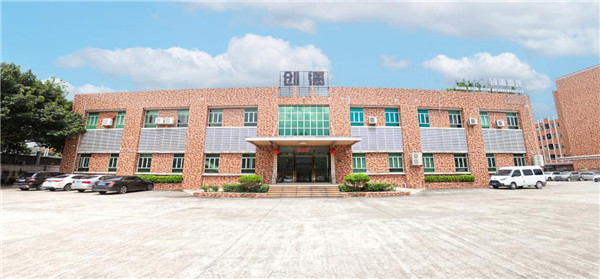
About Us
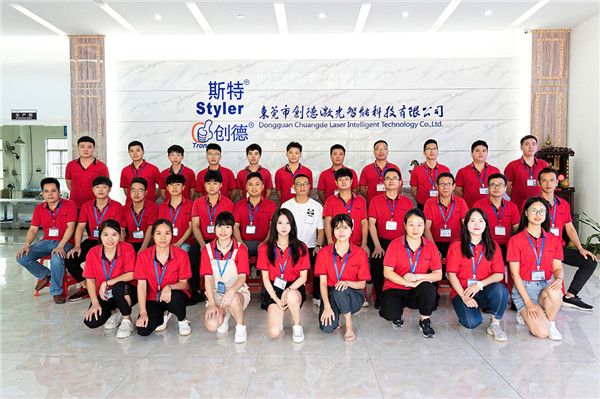
Styler is a professional manufacturer aims to provide high quality and trustful welding machine to the customer. Our company has unique understanding and innovative idea in the field of resistance welding and laser applications, and the welding technology has reached to the international level through continuously investing in the technical research and development. We also cooperate with education institutes on the technology development to enhance our machine's performance and application area. Customer Centric is our core value. Besides of providing personalized high performance and durable machines to the customer, we value the hospitality the most, as we wish customers to have a pleasant purchase experience with us for each visit. Therefore, we have been providing ongoing training internally to provide excellent customer service to our customer. We believe the customer-oriented direction is the key to success, and it has been successfully helping us to develop a strong reputation in the industry, allowing us to retain customers and attracting new customers to start the business with us.
Company Vision
To provide a cutting-edge welding machine in a reasonable price to the customer has been the long-term goal for Styler, and thus, we will continually be developing innovative, stable, and budgeting machine to the customer around the world.
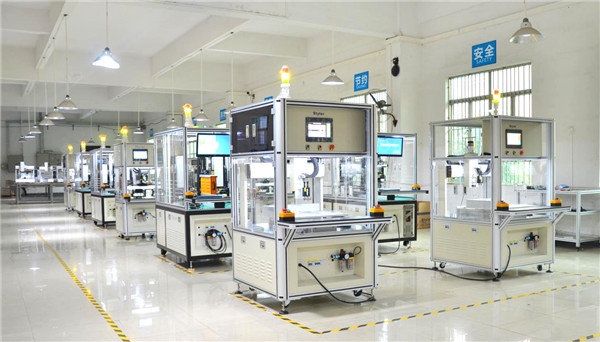
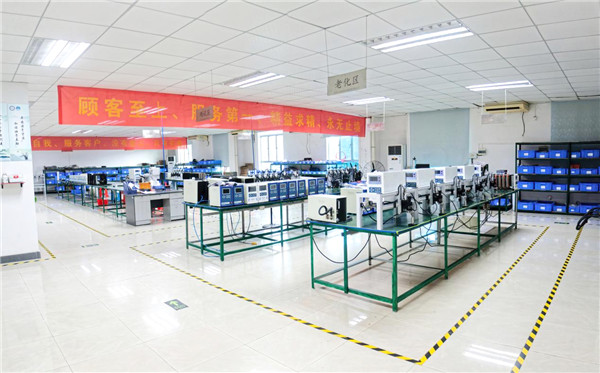

Corporate Social Responsibility
Giving back to the society is important as we are not able to go this far without the community's support. Therefore, Styler has been actively participating in the charity works and government events each year, to improve the local municipal service and facility.
Employee Development
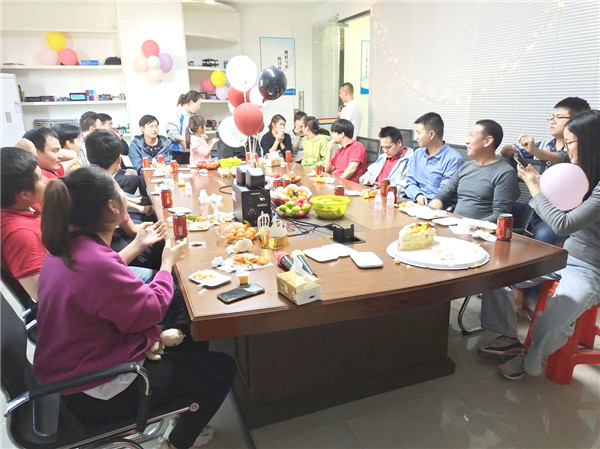
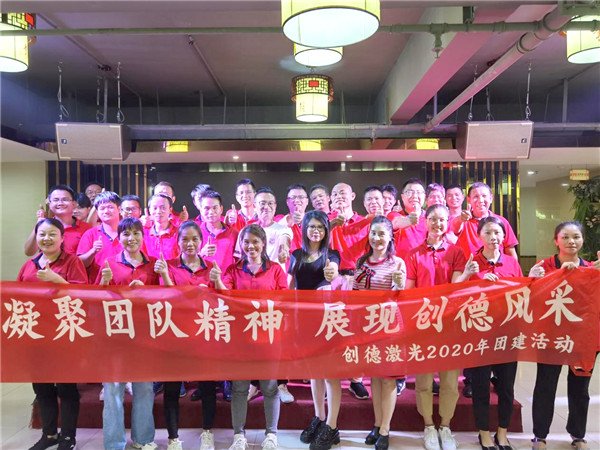
Despite all the growth that has occurred over the years, we remain extremely employee centric. Our management team works tirelessly to ensure each Styler Welding employee feels fulfilled from work and life. As work-life balanced living style is proved that it would increase employee's performance at work, and consequently, providing better service and product to the customer.
Future Technological Trends in ESS Battery Laser Welding (2025–2030)
Innovations shaping high-yield energy storage manufacturing worldwide.
As the ESS industry expands toward sodium-ion battery chemistry, solid-state batteries, and ultra-large 300Ah+ cell formats, battery welding equipment must adapt to evolving manufacturing challenges:
- AI-Driven In-Line Weld Inspection: Integrating machine vision with deep learning algorithms to analyze weld pool thermal signatures in real time, detecting cold welds, false attachments, or internal micro-cracks instantaneously.
- Ultra-High Power Blue Laser Absorption: Leveraging 450nm wavelength blue diode lasers to weld pure copper without spatter, slashing power consumption and eliminating oxidation risks during module production.
- Full Line Smart Automation & Digital Twin Integration: Interfacing multi-axis laser workstations with MES (Manufacturing Execution Systems) to achieve full component traceability, automated fixture calibration, and predictive maintenance.
Complete ESS Battery Welding Equipment Portfolio
Explore our full line of specialized automatic laser welders, spot welders, visual inspection tools, and turnkey battery pack assembly systems.
6000W Automatic Laser Welding Machine
CCD Visual Inspection Machine
7 AXIS Automatic Welding Machine
IPV300 Point Welding Machine
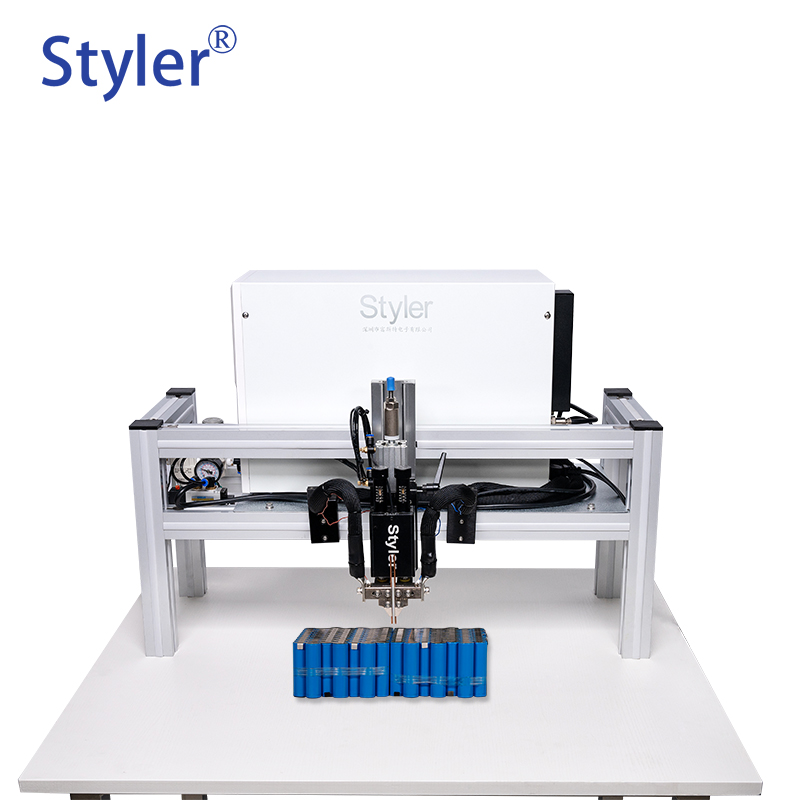
Styler Spot Welding Machine with platform
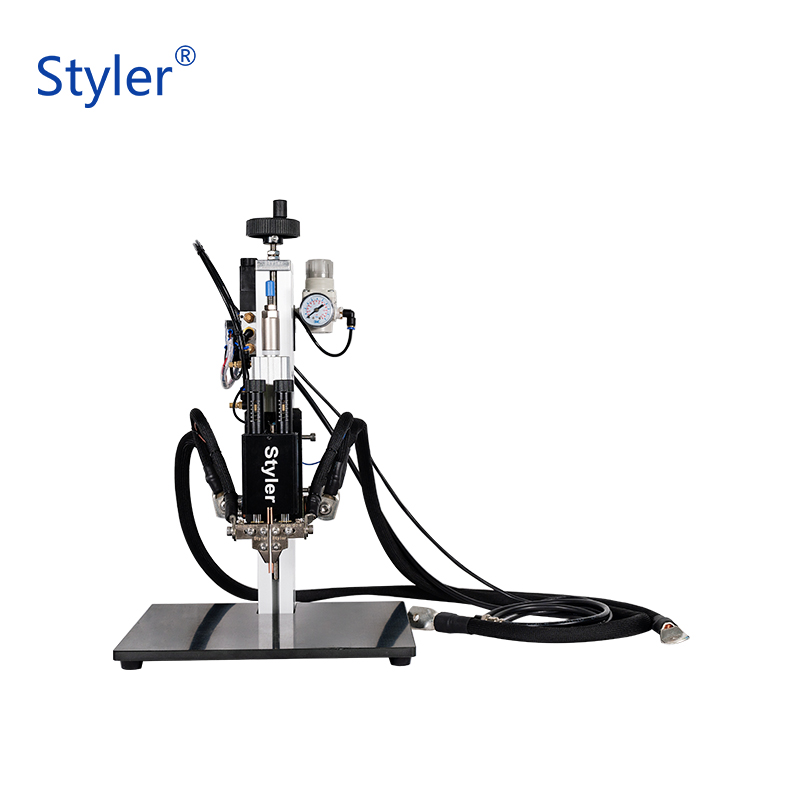
Precise Welding Head For Battery Welder
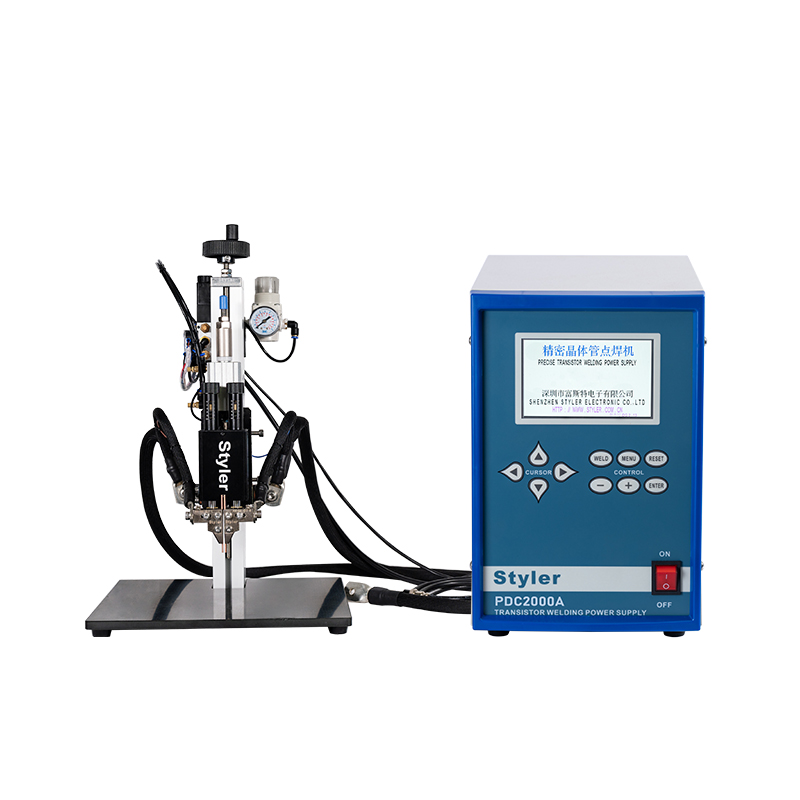
PDC2000A Battery Spot Welder