The Critical Role of Automatic Spot Welding in Consumer Electronics
The global demand for consumer electronics—ranging from ultra-thin smartphones and tablets to high-performance laptops and wearable devices—has reached unprecedented levels. At the core of these portable devices lies the lithium-ion battery pack, which demands high energy density, safety, and long-term durability. To satisfy these rigorous market requirements, battery manufacturers must achieve high-speed mass production without sacrificing quality. This is where automatic spot welding plays a foundational role. It serves as the primary assembly technique for connecting individual battery cells into complex packs, ensuring a stable, low-resistance electrical path that directly impacts the device's overall efficiency and safety.
In modern manufacturing, manual welding is no longer viable for consumer electronics due to human variability, slow cycle times, and the risk of damaging sensitive components. Automatic spot welding machines, incorporating advanced resistance welding or high-power laser welding technologies, provide the speed, precision, and repeatability required to handle thousands of cells per hour. By implementing computer-controlled parameters, servo-driven positioning, and real-time monitoring, these automated systems minimize heat-affected zones, prevent cell puncture, and guarantee consistent weld joint strength across millions of production cycles.
Lithium-ion cells are highly sensitive to thermal stress. Excessive heat during the spot welding process can degrade the internal separator or damage the electrolyte, leading to internal short circuits or thermal runaway. Advanced automatic spot welding systems resolve this by delivering millisecond-level energy pulses, ensuring localized melting with minimal heat dissipation into the battery body.
Technological Landscape: Resistance vs. Laser Welding in Battery Assembly
When designing a high-speed production line for consumer electronics batteries, manufacturers generally choose between two core joining technologies: resistance spot welding and laser welding. Both methods have evolved significantly to meet the challenges of miniaturization and diverse material combinations.
1. Precision Resistance Spot Welding
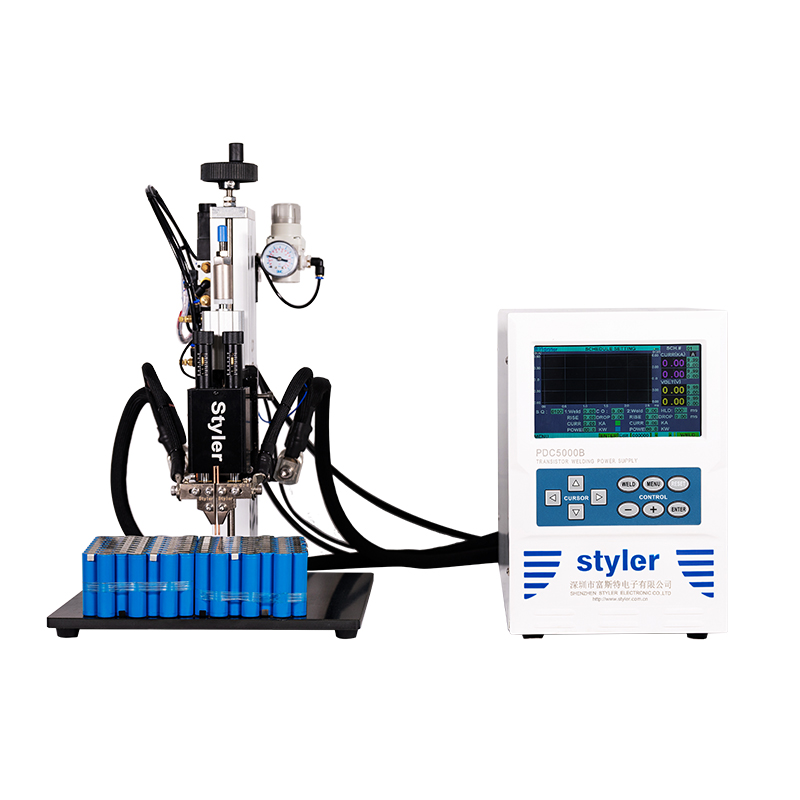
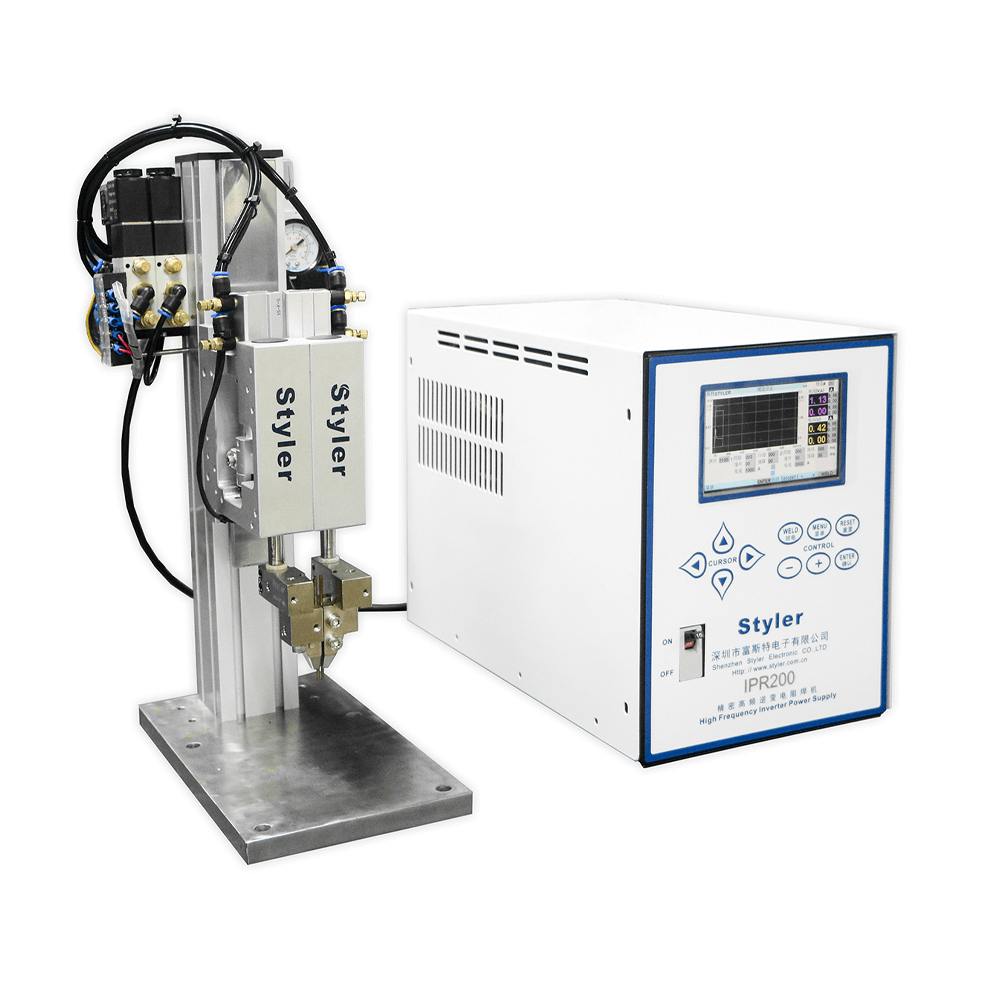
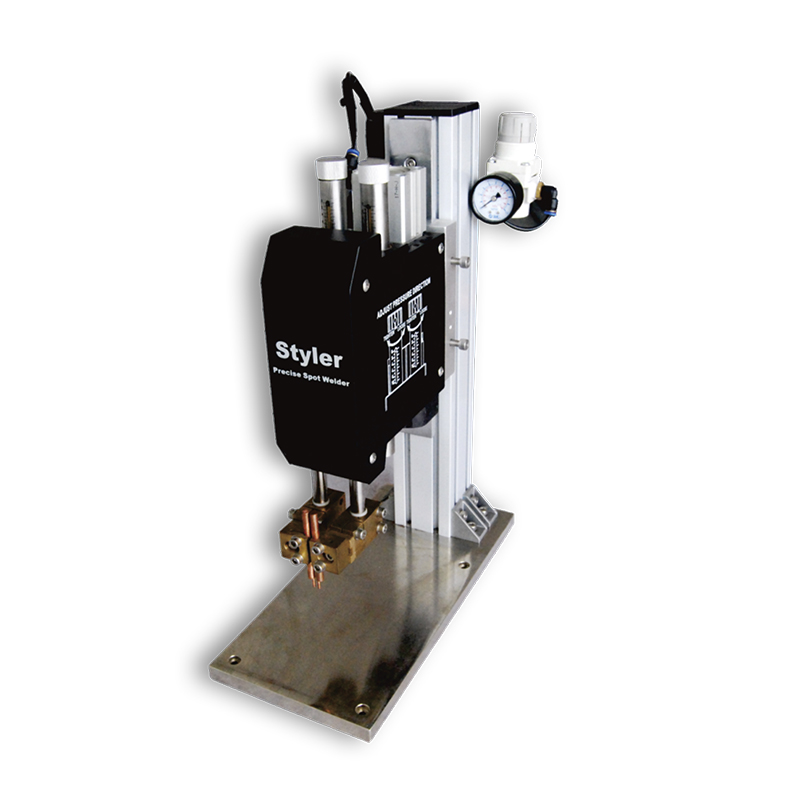
Resistance spot welding remains the industry workhorse for nickel-to-steel and nickel-to-nickel connections. It relies on the electrical resistance of the materials to generate heat at the contact interface under mechanical pressure. Modern systems utilize Medium Frequency Direct Current (MFDC) or High-Frequency Transistor technology. Transistor-based power supplies deliver rapid, square-wave current outputs with microsecond control, which is ideal for welding thin tabs (often less than 0.15mm) to delicate battery terminals. This method is highly cost-effective, reliable, and straightforward to integrate into compact automated stations.
2. High-Power Laser Welding
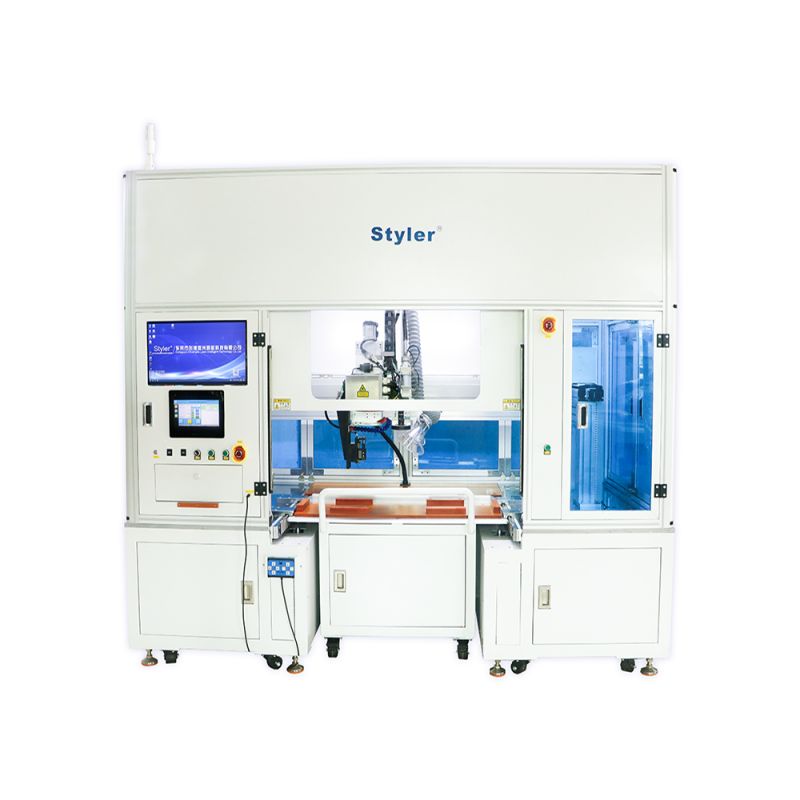
For applications requiring higher throughput, non-contact processing, or the joining of highly conductive materials like copper and aluminum, laser welding has become the preferred choice. Utilizing fiber lasers of up to 6000W, laser welding systems focus intense energy onto a micro-sized spot, achieving deep-penetration keyhole welds in fractions of a millisecond. This non-contact method eliminates tool wear, reduces mechanical stress on the cells, and allows for flexible weld geometries, making it highly suitable for complex battery pack designs found in modern smartphones and electric smart devices.
Material Versatility
Enables the joining of dissimilar metals (e.g., copper to aluminum or nickel to copper) which are essential for maximizing electrical conductivity in high-drain consumer applications.
High-Speed Throughput
Galvanometer scanner-controlled laser welding heads can execute dozens of welds per second, keeping pace with high-speed indexing assembly lines.
Micro-Precision Control
Servo-driven welding heads and precise optical focusing systems ensure consistent weld depth, preventing damage to the battery's internal components.
Integrated Quality Monitoring
Real-time monitoring of weld pressure, displacement, and optical feedback loop systems immediately flags and isolates defective welds.
Industrial Applications and Scene-Specific Solutions
The application of automatic spot welding in consumer electronics is diverse, spanning across different cell formats and battery pack configurations. Each scenario presents unique challenges that require tailored engineering solutions.
Cylindrical Cell Packs (18650, 21700, and 32650)
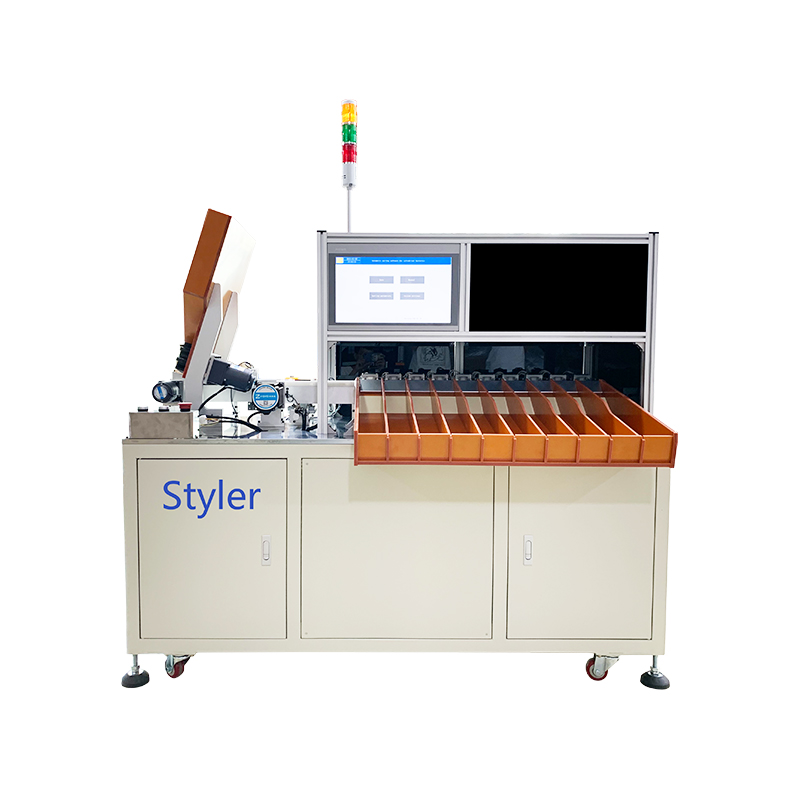
Widely used in power banks, laptops, cordless power tools, and smart home appliances, cylindrical cells must be grouped and connected in series or parallel configurations. High-speed spot welders, equipped with dual-headed configurations and intelligent indexing tables, process these packs by rapidly welding nickel-plated steel tabs to the positive and negative terminals. The synchronization between cell sorting, placement, and welding is critical to maintaining a cycle time of under 1 second per cell.
Pouch and Prismatic Cells for Mobile Devices
Smartphones and wearable electronics demand ultra-thin, lightweight pouch cells. The tabs of these cells are typically made of pure aluminum (positive) and pure copper (negative). Welding these highly conductive materials to the protection circuit board (PCB) or lead frame requires specialized custom welding heads and precise energy profiling. In these scenarios, laser welding or advanced transistor spot welding is deployed to achieve reliable joints without compromising the ultra-thin profile of the device.
CCD-Guided Quality Assurance and Inspection
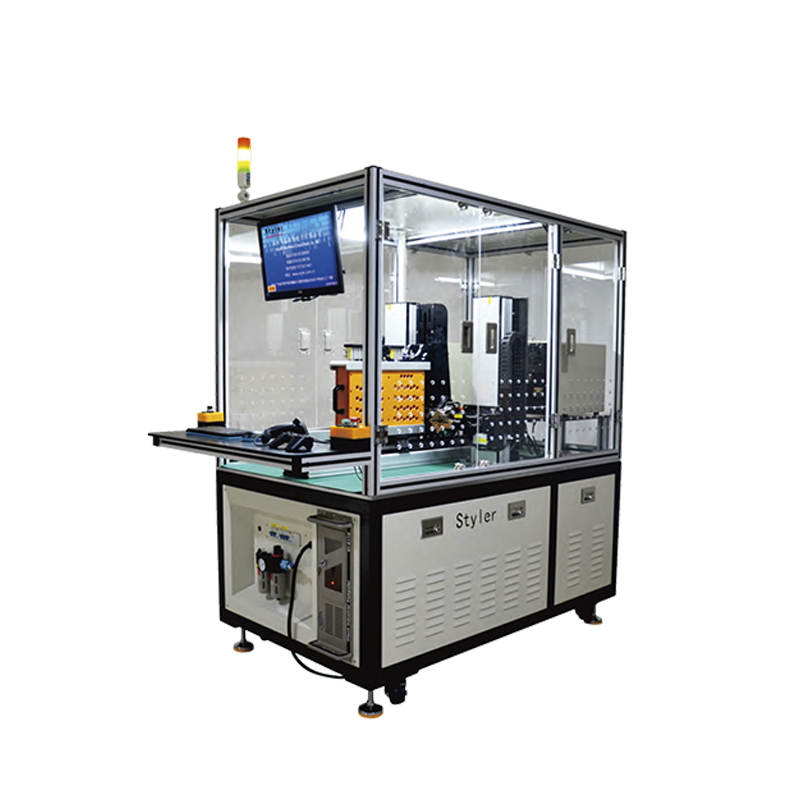
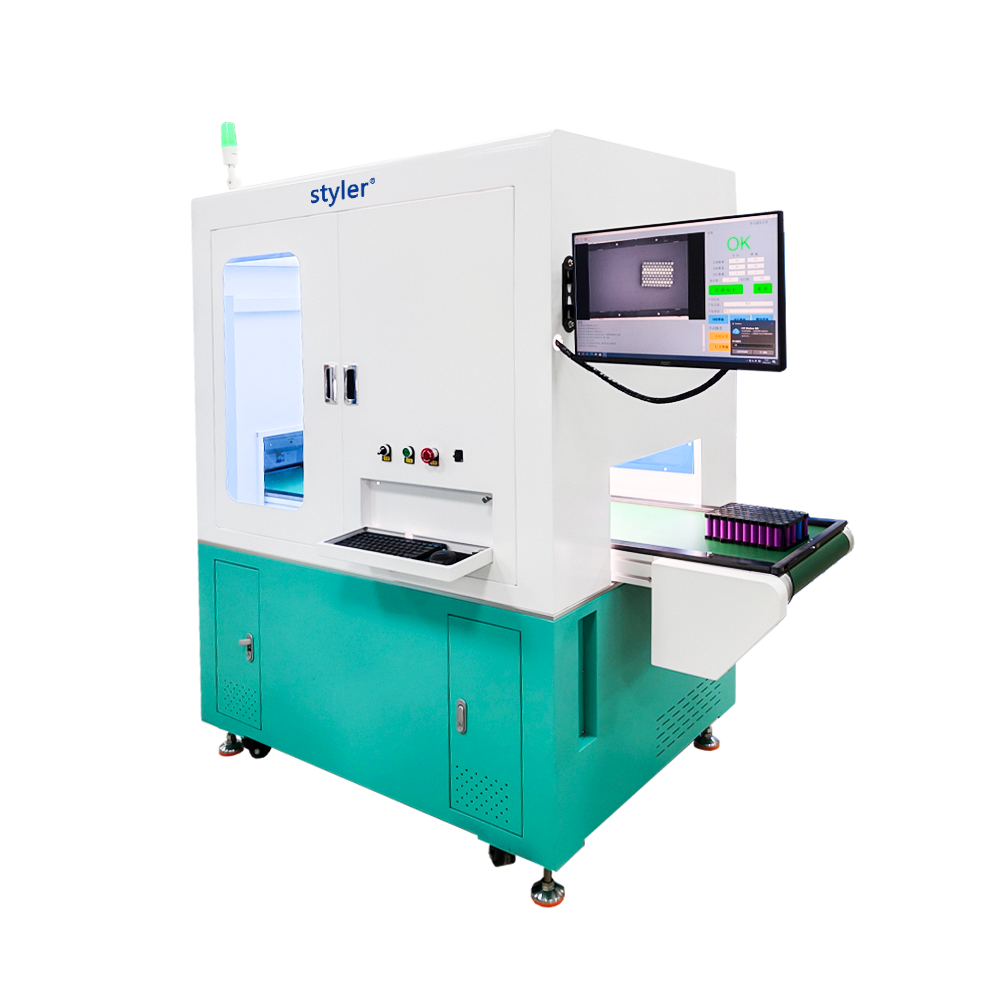
In high-speed mass production, visual inspection is indispensable. Integrating a CCD visual inspection machine directly into the welding line ensures that every weld spot is accurately aligned. The CCD system captures high-resolution images of the battery pack before and after welding, automatically identifying defects such as offset welds, surface burns, cracks, or missing spots. This automated feedback loop guarantees that only 100% compliant battery packs proceed to the final packaging stage.
About Us
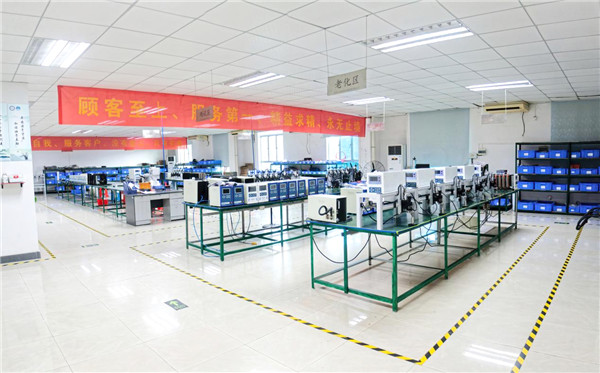
Styler is a professional manufacturer aims to provide high quality and trustful welding machine to the customer. Our company has unique understanding and innovative idea in the field of resistance welding and laser applications, and the welding technology has reached to the international level through continuously investing in the technical research and development. We also cooperate with education institutes on the technology development to enhance our machine’s performance and application area. Customer Centric is our core value. Besides of providing personalized high performance and durable machines to the customer, we value the hospitality the most, as we wish customers to have a pleasant purchase experience with us for each visit. Therefore, we have been providing ongoing training internally to provide excellent customer service to our customer. We believe the customer-oriented direction is the key to success, and it has been successfully helping us to develop a strong reputation in the industry, allowing us to retain customers and attracting new customers to start the business with us.

Company Vision
To provide a cutting-edge welding machine in a reasonable price to the customer has been the long-term goal for Styler, and thus, we will continually be developing innovative, stable, and budgeting machine to the customer around the world.

Corporate Social Responsibility & Employee Development
Giving back to the society is important as we are not able to go this far without the community’s support. Therefore, Styler has been actively participating in the charity works and government events each year, to improve the local municipal service and facility.
Employee Development
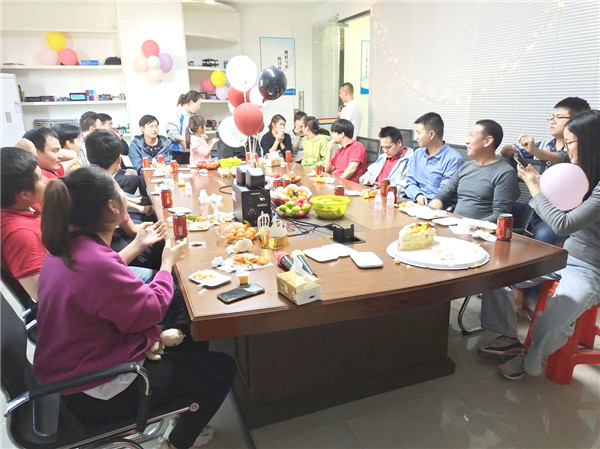
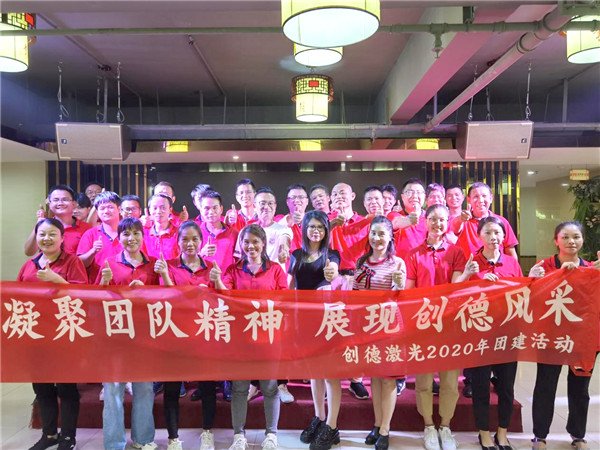
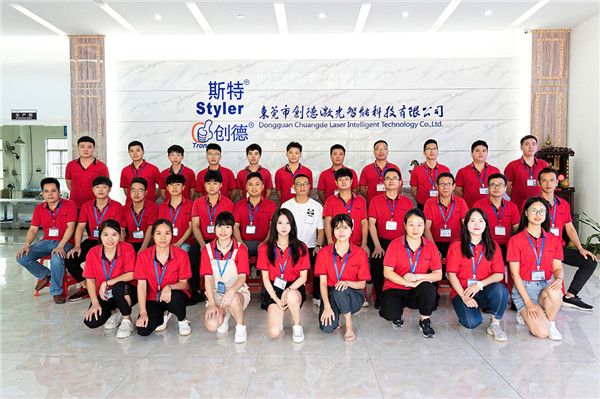
Despite all the growth that has occurred over the years, we remain extremely employee centric. Our management team works tirelessly to ensure each Styler Welding employee feels fulfilled from work and life. As work-life balanced living style is proved that it would increase employee’s performance at work, and consequently, providing better service and product to the customer.
Future Trends in Battery Pack Spot Welding Technology
As the battery industry transitions towards higher energy density chemistries, such as solid-state batteries, and demands faster charging capabilities, the requirements for battery pack micro-joining will become even more stringent. Several key trends are shaping the future of automatic spot welding in high-speed consumer electronics manufacturing:
1. Artificial Intelligence and Machine Learning in Quality Control
Future automated welding lines will integrate AI algorithms directly with welding controllers. By analyzing real-time wave data of current, voltage, displacement, and thermal signatures from each weld joint, the system can predict electrode wear, automatically adjust welding parameters on the fly, and prevent defects before they occur. This predictive maintenance approach minimizes downtime and maximizes production yield.
2. Smart Manufacturing and IoT Integration
Under the Industry 4.0 framework, automatic spot welding machines are becoming fully connected IoT nodes. Every weld's data is recorded and linked to the specific serial number of the battery pack. This end-to-end traceability allows manufacturers to easily identify the root cause of any field failures, optimize production processes, and maintain strict quality compliance standards.
3. Multi-Axis Robotic Integration
To accommodate the increasingly complex shapes of modern consumer devices, welding systems are moving away from simple linear gantries to multi-axis collaborative robots (cobots). These robotic arms, fitted with custom-designed welding heads, can weld from multiple angles and access confined spaces within compact device enclosures, offering unprecedented flexibility in battery pack design.